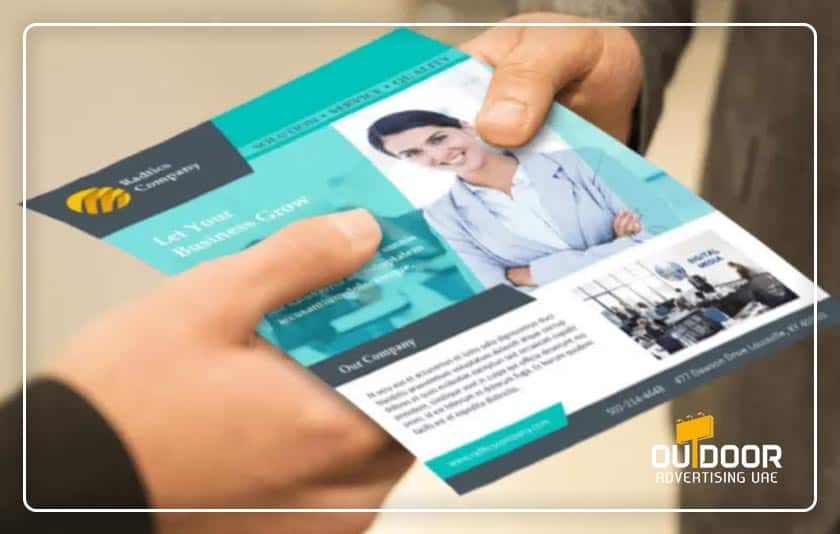
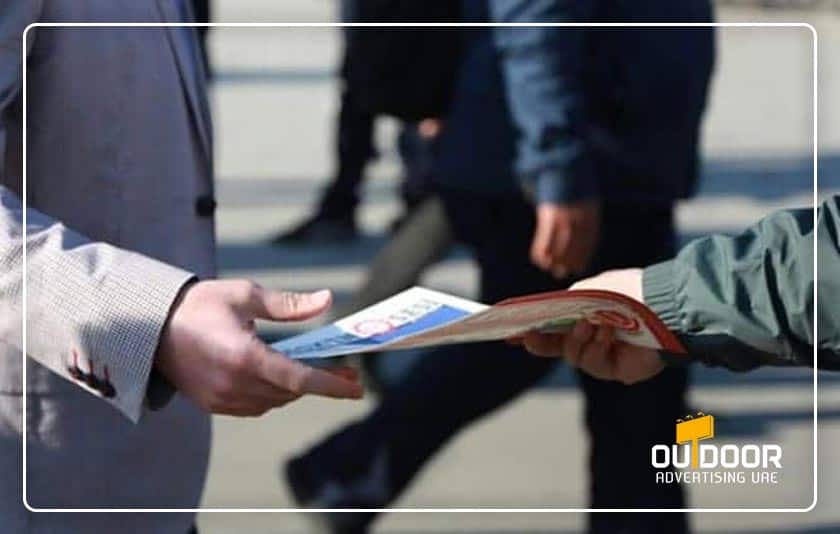
FLYER DISTRIBUTION COSTS & RATES IN DUBAI
How much does flyer distribution cost in Dubai? Costs vary according to the number of flyers, target locations, distribution method, campaign duration, staffing requirements, access permissions and reporting requirements. Printing costs should be calculated separately where applicable.
| Flyer Distribution Type | Target Locations | Estimated Cost (AED) | Typical Application |
| Door-to-Door Flyer Distribution | Villas, apartments, residential communities | 120 – 200 per 1,000 flyers | Restaurants, clinics, salons, local services |
| Hand-to-Hand Flyer Distribution | Metro stations, streets, commercial areas | 150 – 300 per 1,000 flyers | Promotions, events, retail campaigns |
| Car Windshield Flyer Distribution | Parking areas, malls, business districts | 180 – 350 per 1,000 flyers | Automotive, real estate, offers |
| Office & Corporate Flyer Distribution | Business towers, offices, commercial zones | 200 – 400 per 1,000 flyers | B2B services, corporate solutions |
| Mall & Shopping Area Distribution | Malls, retail destinations, entertainment areas | 250 – 500 per 1,000 flyers | Retail, fashion, hospitality brands |
| Event & Exhibition Flyer Distribution | Exhibitions, conferences, public events | 250 – 500 per 1,000 flyers | Product launches & event promotions |
| Premium Targeted Distribution Campaign | Selected communities & high-income areas | 300 – 700 per 1,000 flyers | Luxury brands & premium services |
| Large Volume Distribution (50,000+ Flyers) | Dubai-wide campaigns | Custom Package | Large brands & government campaigns |
**Prices are estimated and may vary depending on flyer quantity, distribution area, campaign duration, manpower requirements, approvals, and reporting needs. Printing costs are generally calculated separately based on flyer size, paper quality, and quantity.
FLYER DISTRIBUTION PLANNING & BOOKING IN DUBAI
Planning a flyer distribution campaign in Dubai involves selecting suitable target areas, distribution quantities, flyer sizes, delivery methods, campaign schedules and applicable permissions. We assist advertisers in exploring residential building flyer distribution, commercial area distribution, event-based handouts and other authorised leaflet distribution opportunities based on campaign objectives, target audience, geographic coverage and budget.
Our booking assistance covers selected residential and commercial communities across Dubai Marina, JBR, JLT, Downtown Dubai, Business Bay, Jumeirah, Al Barsha, Deira, Bur Dubai, JVC and other Dubai locations, subject to community regulations and distribution permissions. Advertisers can compare available distribution areas, estimated rates, minimum quantities, campaign schedules, flyer printing specifications, delivery arrangements and applicable approvals.
Final flyer distribution locations, quantities, methods, rates and campaign dates are subject to building management permissions, community regulations and operational availability. Door-to-door delivery to individual apartments or villas is not included unless specifically permitted and agreed in advance. Distribution at building receptions or other approved collection points depends on the relevant property management’s authorisation.
REQUEST FLYER DISTRIBUTION AVAILABILITY & RATES
Looking for flyer distribution services in Dubai? Share your preferred target areas, number of flyers, distribution method, campaign period and budget to explore available flyer distribution options and estimated rates.
Complete the enquiry form below, and our team will review your requirements and get back to you with suitable flyer distribution options, permitted delivery methods and booking requirements.
Major Dubai Areas for Flyer Distribution & Audience Opportunities
Flyer distribution in Dubai allows businesses to target selected residential communities, commercial districts and local catchment areas. Campaigns can be planned according to the target location, required distribution quantity and permitted distribution method, helping brands focus their marketing on specific areas of Dubai.
| Flyer Distribution Area | Communities & Nearby Areas | Audience Opportunity |
| Dubai Marina & JBR | Dubai Marina, JBR and surrounding waterfront communities | Residents, professionals, tourists, hospitality guests and local visitors |
| Downtown Dubai & Business Bay | Downtown Dubai, Business Bay and surrounding central Dubai districts | Residents, professionals, office employees, business visitors and tourists |
| Jumeirah & Umm Suqeim | Jumeirah 1, Jumeirah 2, Jumeirah 3, Umm Suqeim and surrounding communities | Residents, families and local community audiences |
| Dubai Hills Estate | Dubai Hills Estate and surrounding residential communities | Residents, families and community audiences |
| JVC & JVT | Jumeirah Village Circle, Jumeirah Village Triangle and surrounding communities | Residents, families and professionals |
| Arabian Ranches | Arabian Ranches 1, 2 and 3 and surrounding residential areas | Residents and families |
| Mirdif | Mirdif, Uptown Mirdif, Mirdif Hills and surrounding areas | Residents, families and community audiences |
| Al Barsha & Barsha Heights | Al Barsha 1, 2 and 3, Barsha Heights and surrounding areas | Residents, families, professionals and local visitors |
| Dubai Silicon Oasis | Dubai Silicon Oasis, Academic City, Liwan and surrounding communities | Residents, students, professionals and families |
| International City | International City clusters and surrounding residential and commercial areas | Residents, workers, shoppers and local businesses |
| Deira | Al Rigga, Port Saeed, Al Muraqqabat, Naif and surrounding districts | Residents, workers, shoppers, businesses and visitors |
| Bur Dubai & Karama | Bur Dubai, Karama, Oud Metha and surrounding central Dubai areas | Residents, families, professionals, workers and shoppers |
| Al Warqa & Nad Al Hamar | Al Warqa 1–5, Nad Al Hamar and surrounding communities | Residents, families and community audiences |
| Dubai South & Expo City Dubai | Dubai South, Expo City Dubai and surrounding residential and business areas | Residents, professionals, employees and business visitors |
Distribution Note: Flyer distribution availability and permitted methods vary by location, building, community and property management requirements. Distribution within residential towers, villas, offices, malls, events or other private properties may require prior permission from the relevant property owner, management company or authority.
Campaign Measurement Note: Flyer campaigns should be measured primarily by the agreed number of flyers distributed rather than estimated population or monthly audience reach. Actual response depends on factors including the offer, creative, distribution method, target area, timing and call to action.
Types of Flyer Distribution Services We Offer
Door-to-Door Flyer Distribution
Flyers may be distributed within selected villas, residential communities and apartment environments where the necessary property or community permissions are available.
Hand-to-Hand Flyer Distribution
Promoters distribute flyers directly to people at selected permitted locations. Exact distribution areas and activity requirements should be confirmed before the campaign.
Mall & Retail Flyer Distribution
Flyer distribution may be possible within selected shopping malls and retail environments, subject to the permission and commercial requirements of the relevant property or venue operator.
Office & Business Tower Distribution
Campaigns may be planned within selected offices, business towers and commercial environments where building access and property-management permissions are available.
Event & Exhibition Flyer Distribution
Flyer distribution may be available at selected exhibitions, conferences and events, subject to organiser and venue requirements.
Community & Residential Distribution
Campaigns can target selected residential communities according to the required geography, distribution quantity and permitted distribution method.
Car & Parking Area Distribution
Distribution involving parked vehicles or parking areas should only be offered where the relevant property or parking operator has specifically permitted the activity.
FLYER PRINTING & ARTWORK
Before printing a large quantity of flyers, advertisers should confirm the final approved artwork, flyer dimensions, required quantity, paper specification, distribution method, target locations, campaign dates and applicable property or venue permissions.
Where campaign or distribution approval is required, large-volume printing should ideally be finalised after the relevant requirements have been confirmed.
FLYER DISTRIBUTION CAMPAIGN REPORTING & MEASUREMENT
Quantity Allocated • Quantity Distributed • Distribution Locations • Campaign Dates & Times • Team/Promoter Reporting • Photographic Evidence Where Applicable • GPS/Location Records Where Available
Distribution quantity should not be presented as the number of people who read or responded to the flyer.
FLYER DISTRIBUTION RULES & REQUIREMENTS IN DUBAI
Flyer distribution in Dubai is subject to applicable advertising requirements, distribution permissions and the rules of the property, community or venue where the campaign is conducted. Dubai’s advertising framework specifically recognises leaflets and stickers as advertising media, and applicable permissions can depend on the location and distribution method. Dubai Land Department
Distribution Permissions
Flyers should only be distributed at locations where the required advertising and distribution permissions are in place. Distribution in residential communities, office buildings, shopping malls, events or other privately managed environments may require permission from the relevant property owner, community management, venue or organiser. flyer distribution
Property & Venue Requirements
Access to villas, residential towers, gated communities, business premises, malls and event venues is controlled by the relevant property or venue. A location with high pedestrian or vehicle traffic should not automatically be considered available for flyer distribution.
Hand-to-hand distribution and distribution involving parked vehicles should only be conducted where the applicable location permissions have been confirmed. flyer distribution
Flyer Content & Advertising Requirements
Flyer content should comply with applicable UAE and Dubai advertising requirements. Dubai’s advertising framework requires advertising content to observe standards relating to accuracy, public order and applicable language requirements. Dubai Land Department
Certain regulated products, services or advertising categories may be subject to additional requirements.
Printing, Artwork & Campaign Details
Before printing large quantities, advertisers should confirm the final artwork, flyer dimensions, required quantity, paper specification, distribution method, target locations, campaign dates and applicable permissions.
Where approval is required, large-volume printing should ideally be finalised after the relevant creative and distribution requirements have been confirmed. flyer distribution
Explore outdoor advertising opportunities across Dubai, including billboards, digital OOH (DOOH), lamppost advertising, bridge advertising, transit media and other formats across major roads, commercial districts and selected locations throughout the emirate.
Discover available OOH advertising formats, locations, indicative rates and campaign opportunities in Dubai based on your campaign objectives, preferred areas, duration and current media availability.